Prescription Devices
Beyond just pacemakers. Includes hearing aids, specialized orthopedic shoes, and even certain air filters if prescribed for severe chronic respiratory ailments.
Read details → Stop believing the marketing hype about automated refunds. Understanding the non-refundable Medical Expense Tax Credit (METC) requires navigating a bureaucratic labyrinth designed to minimize your payout.
Most taxpayers treat the Medical Expense Tax Credit as a simple line item, but in reality, it is a non-refundable credit that only starts working after you cross a significant financial pain threshold. The CRA doesn't just hand back money spent on supplements or generic wellness; they require a clinical necessity that matches their rigid internal definitions. Many Canadians lose thousands annually because they fail to aggregate expenses within a specific 12-month period ending in the current tax year, opting instead for the standard calendar year which might not be mathematically optimal.
The complexity increases exponentially when dealing with private insurance premiums. While you might think your employer-paid premiums are deductible, only the portion you personally contribute is eligible. Furthermore, the standard advice often ignores the interplay between provincial credits and federal filings. At Copper Dweller, we look at the raw mechanics of these filings to ensure you aren't leaving money on the table simply because the paperwork felt too dense.
Don't assume your "health-related" purchase is deductible. The CRA logic is binary: it's either on the list, or it's a personal expense.
Beyond just pacemakers. Includes hearing aids, specialized orthopedic shoes, and even certain air filters if prescribed for severe chronic respiratory ailments.
Read details →Premiums paid to private health insurance plans (like Extended Health) are often the largest unclaimed expense for self-employed individuals.
View loopholes →Eye exams, prescription glasses, contact lenses, and non-cosmetic dental work. Cosmetic whitening is strictly forbidden by the CRA.
The CRA applies a "threshold" to your medical claims. You can only claim expenses that exceed either 3% of your net income or a set dollar amount (currently around $2,635), whichever is lower. This means if you earn $100,000, the first $3,000 of medical expenses provide zero tax relief. Marketers love to talk about "saving money on health," but they rarely mention that for high earners, the bar is set deliberately high to prevent minor expenses from reducing tax revenue.
To optimize this, families should always claim all medical expenses on the tax return of the spouse with the lower net income. This lowers the 3% threshold, allowing a larger portion of the expenses to be converted into a tax credit. If you don't calculate both scenarios, you are essentially volunteering extra tax to the government.
"The METC is not a subsidy for the healthy; it is a partial recovery mechanism for the chronically ill and those facing sudden, catastrophic medical costs. Assuming it covers your basic dental cleaning is a rookie mistake."
— Lead Audit Specialist, Copper Dweller
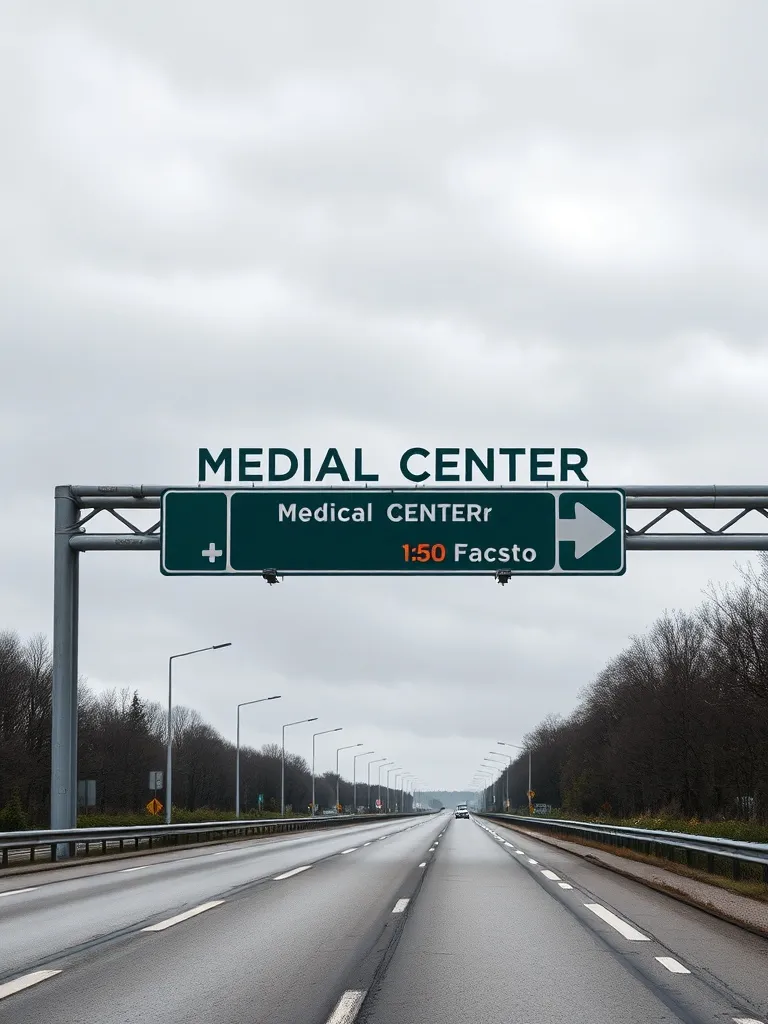
If you must travel at least 40 kilometers (one way) to obtain medical services not available near your home, you can claim public transportation costs. However, the real value lies in the 80-kilometer rule. Once you exceed 80km, you can claim vehicle expenses (gas, wear and tear), meals, and even accommodation.
The CRA audits medical claims more frequently than almost any other personal tax credit. Why? Because people are lazy with their documentation. A credit card statement is not a receipt in the eyes of an auditor. You need the itemized breakdown from the pharmacy or clinic that lists the specific patient, the date, and the nature of the service.
Scan every receipt immediately. Thermal paper fades, and the CRA can request records from up to six years ago. If the ink is gone, so is your deduction.
For items like air conditioners or high-efficiency filters, you need a written prescription before the purchase. Retroactive certificates are often rejected.
Simplifying your records by throwing them in a shoebox is a recipe for a reassessment. A structured logbook, matched to bank transactions, is the only way to survive a deep-dive audit without paying back thousands in interest and penalties.
Generally, no. Even with a doctor's note, the CRA views the incremental cost of "specialty" food as a personal choice. The only exception is specifically manufactured gluten-free products for individuals with Celiac disease, and even then, you can only claim the price difference between the gluten-free item and the standard equivalent.
Yes, but only if purchased from a licensed producer under the Cannabis Act. Buying from a local recreational dispensary—even if for health reasons—does not count. You must have the medical documentation and buy through the proper legal medical channels.
This is a grey area that often triggers audits. If you travel to another country for a procedure that is available in Canada, the CRA may argue the travel wasn't "essential." However, the cost of the surgery itself (if it would be legal in Canada) is usually eligible. Always consult a specialist before claiming international medical travel.
Our technical audit identifies exactly which claims will survive a CRA review and which are marketing myths that lead to penalties.
New guides and news straight to your email.